Posted: Wednesday, September 1, 2010 Author: admin
Category: Press Releases Comments(0)

8:00 pm, August 22, 2010

 By Sherri Welch of Crain's Detroit News

A senior community in the works near Detroit's east riverfront will not only keep the residents living in their home neighborhoods but will also bring new construction and health care jobs to the city.

Presbyterian Villages of Michigan and United Methodist Retirement Communities Inc. plan before the end of the year to begin work on the East Jefferson Neighborhood Project, a $30 million senior living project that will include the city's first affordable assisted living development.

The project is Presbyterian Villages' seventh in the city and its largest. It also marks the latest example of 13 years of senior housing development in Detroit by the organization, totaling more than $67 million in investment. Located two blocks off the Detroit River, the development is the second of five pilot sites across the state selected for affordable assisted living funding by the Michigan State Housing Development Authority, following another built by Genesis Nonprofit Housing Corp. in Grand Rapids.

It is part of a larger senior community planned by Presbyterian Villages that when complete will offer affordable assisted living, independent living, residential nursing home units, an adult day center, senior health and wellness services, recreation spaces and a community café. Presbyterian Villages expects the development to provide for 750 residential and nonresidential seniors from surrounding neighborhoods.

“There's (an) extremely high concentration of seniors in the east Detroit/East Jefferson area,” said PVM CEO Roger Myers. “As they become increasingly frail ... without an option like what we are doing, they would likely be forced to move out of the city.”

Aside from construction jobs, the first phase of the project is expected to create nearly 150 health-related jobs, Myers said.

It's also expected to draw youths from surrounding neighborhoods and the nearby University Prep Math and Science High School opening this fall to visit the planned café or to volunteer or do internships, he said.

PVM is finalizing a purchase agreement with the UAW/GM Center for Human Resources to buy 1.78 acres and two former Parke-Davis buildings there for $700,000, said Myers. The organization expects to close on the site within two months.

The property is bounded by Franklin to the north, Wight to the south, McDougall to the west and Walker to the east.

After being selected as one of five grantees by MSHDA, Chelsea-based United Methodist Retirement Communities asked PVM to work together on the project. Presbyterian Villages is the developer and United Methodist will be part of the ownership group in providing services.

“PVM brought strengths we did not have,” said Marie Seddon, executive director of the United Methodist Retirement Communities Heritage Foundation. “PVM has a long and successful history of developing senior housing projects, particularly in Detroit.”

UMRC posted just over $41 million in revenue and a net loss of $783,447 in 2008, the year of its latest tax filing.

On the first phase of the East Jefferson project, redevelopment work on the larger, 78,000-square-foot building will start by the end of the year, Myers said.

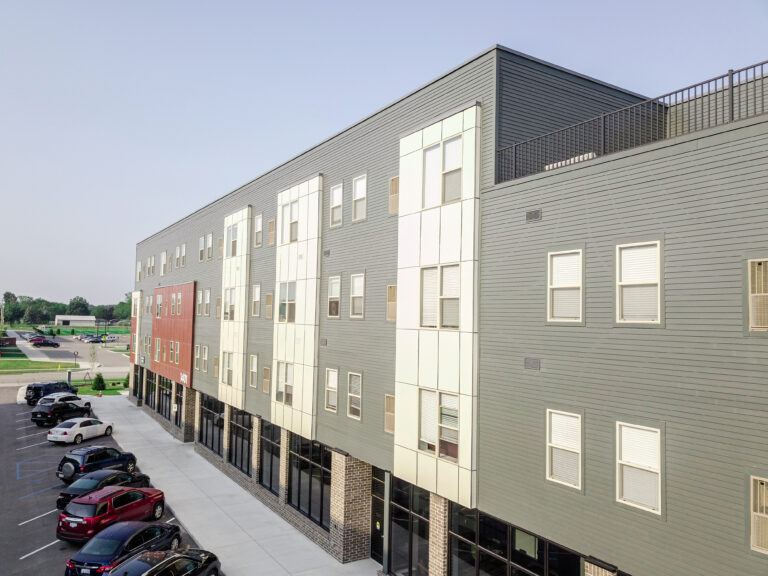
Floors two through four will be retrofitted for one-bedroom apartments of affordable assisted living. The first floor will be converted to an adult day center and space for physical therapy, occupational health services and other senior health and wellness services.

Presbyterian Villages and Henry Ford Health System are discussing the health care services to be in the first building, Myers said. The first phase of the community, which should take 12-14 months to complete, will also include apartment balconies, rooftop gardens and green space, said Brian Carnaghi, senior vice president of finance and business development at Presbyterian Villages.

It is expected to create 118 health-related jobs for the adult day center in areas such as nursing, physical therapy, pharmacy and social services, Carnaghi said, with another 28 home health care jobs for the affordable assisted living.

PVM and United Methodist have rounded up about $15 million in funding toward the project. So far, that includes principally low-income housing tax credits, and money from the U.S. Department of Urban Development and Housing passed through the city, through MSDHA and directly from the federal agency, Carnaghi said. There is adequate funding to begin construction, but funding for the second phase is still needed.

That work, on the 8,000-square-foot building, has a less-specific timeline tied to PVM's ability to secure additional funding, Carnaghi said, but it is likely to be a year or more out.

PVM plans to add two upper floors and 16,000 square feet to the building that would be environmentally friendly and have rooms and communal spaces for 24 seniors in home-like settings.

On the ground floor, it plans a community café that has computers and offers programs for exercise, arts and other activities. The development will have other green features, such as a rooftop garden, and a connection to the UAW campus.

A third component planned for the community is construction of a building with 40 units of independent affordable housing. PVM plans to apply for a capital advance from HUD to construct the building as soon as this year, Myers said.

The East Jefferson Neighborhood Project “will be far and away the largest we have done in the city,” Myers said.

The obligated group, which includes PVM, the PVM Foundation and three of its villages — in Chesterfield Township, Redford Township and Westland — reported $35 million in operating revenue for 2009 and net loss from operations of $778,488.

Share:
Posted: Wednesday, August 25, 2010 Author: admin
Category: Press Releases Comments(0)
By John Sherwood
thetimesherald.com
August 21, 2010
 
 
The plan to revive the long-empty Sperry's Department Store Building in Port Huron is a million dollars to the good.

The U.S. Department of Housing and Urban Development on Friday announced it will provide $1 million to the city to support conversion of the building into new professional and retail space.

HUD also will guarantee a $1.5 million private loan committed by the city to further promote economic development downtown.

The money is linked to the project's inclusion of a business-incubator project that is likely to be housed in the building's spacious basement and is expected to create and retain 195 jobs.

The award announcement gladdened the heart of Tom Johnson, who with Dave White owns Landmark Development, the Boyne City-based development company that aims to make the building thrive again.

"We're very pleased," Johnson said Friday. "This is a big, important step toward assembling the funding necessary."

Johnson and his partner have estimated an $11 million total cost for the project, and a lot of that money is not in hand.

"There are a number of funding sources that we have been working on, toward making this project successful. One is tax credits from different sources," Johnson said.

"We are waiting to hear back about our tax-credit applications. We have one for a brownfield tax credit from the Michigan Economic Development Corp."

He said it probably would take a couple of months for that process alone to be completed.

Johnson has said the company is considering six to eight financing options to make the project work. For example, the company is seeking state and federal tax credits because the building will be made energy-efficient and will be registered on the National Register of Historic Places.

Johnson said Friday he was gratified the federal funding came in so quickly.

"They (application processes) sometimes can take longer, and this came in the soonest. That makes us a lot more confident," Johnson said. "Remember, it's just one piece, but having that in place is a big help."

The building, built in 1922, once housed Sperry's, a department store that served as the main shopping hub for the region for decades. It contains 60,000 square feet, or about 14,000 square feet per floor.

The funding is provided through HUD's Brownfields Economic Development Initiative, which supports community development in environmentally distressed locations.

HUD's announcement was greeted with general applause by local officials.

Port Huron City Manager Bruce Brown described the work done by Landmark Development as "astute."

 
"It's an extremely complicated project to put together in a tough economic time," Brown said. "Landmark Development has the experience and the savvy to put the pieces together. I'm very optimistic that this is going to happen."

"It's one more success story that these guys have been able to pull together," said St. Clair County Administrator Shaun Groden, who also is president of the Economic Development Alliance of St. Clair County.

Groden said the building "would be a great location for a facility to bring more people downtown. ... If there's an iconic building downtown, that's got to be the one."

"These are exciting times," said D. Scott Beedon, the county's small business concierge. "We've worked long and hard to get these applications in. ... The developers see this as a game-changer, and I have to agree. It can only mean good things for downtown."

Johnson described a best-case scenario in which all funding is obtained in time to launch a 10-month renovation phase. Under that scenario, the building could be ready for occupancy by the late summer of 2011.

"We want to demonstrate that this is something we can accomplish in the foreseeable near future, but we're being careful that, until we get all the approvals in, we don't say it's a done deal. But this certainly has made a big difference."


Share:
Posted: Thursday, August 5, 2010 Author: admin
Category: Uncategorized Comments(0)

The following Hooker DeJong projects recently received USGBC Certification:

LEED Gold for Nichols headquarters in Norton Shores

LEED Certified for The Hines Building in Downtown Muskegon

Share:
Posted: Thursday, August 5, 2010 Author: admin
Category: Press Releases Comments(0)


Muskegon, Mich. – Hooker DeJong Architects & Engineers of Muskegon was honored by the Ohio Capital Corporation for Housing (OCCH) for their redesign work on an affordable housing apartment complex in Newark, Ohio.

Each year OCCH honors investors, developers, lenders, management companies, nonprofit and for-profit organizations, and government entities that partner with OCCH in the development of and commitment to affordable housing in Ohio. Hooker DeJong was recognized in the category of Excellence in Affordable Housing Preservation.

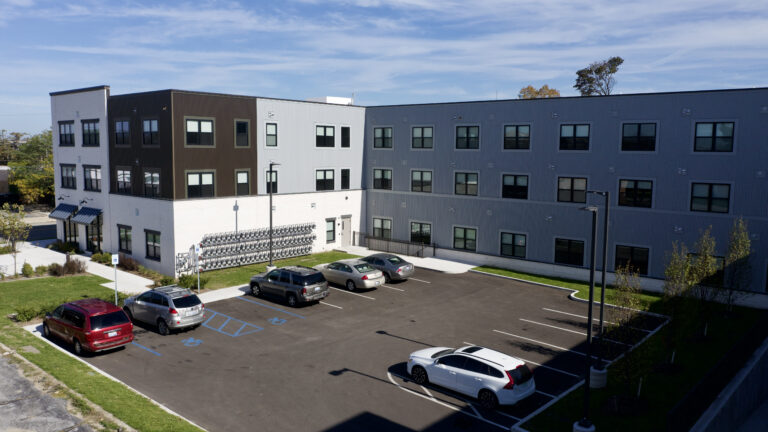
Trail West Apartments was an 86-unit apartment complex that Hooker DeJong architects redesigned and also included plans for the design of a new clubhouse. Trail West is managed by Millennia Housing Management which operates more than 7,000 units in seven states including Michigan.

David Layman, President & CEO, Hooker DeJong Architects & Engineers said, “We are pleased to be recognized for the work that we have done in affordable housing and particularly pleased that we were honored for one of our efforts in Ohio with the Millennia Company.”

The Ohio Capital Corporation for Housing is a nonprofit corporation based in Columbus that works with private & public developers to create affordable housing opportunities. OCCH works for the construction, rehabilitation and preservation of affordable housing throughout Ohio.

Serving West Michigan since 1936, Hooker DeJong Architects & Engineers is a full service design firm located in downtown Muskegon. Hooker DeJong specializes in the financial, governmental and multi-family housing sectors. 


Share:
   1  2  next »
Subscribe to RSS

archive
« September 2010 »
S M T W T F S
29 30 31 1 2 3 4
5 6 7 8 9 10 11
12 13 14 15 16 17 18
19 20 21 22 23 24 25
26 27 28 29 30 1 2

categories

contributors